What the human research shows
A drug that did exactly what it was designed to do to a blood marker, and was never tested for whether that mattered. The hormone data are real and from proper early-phase trials. Everything downstream of the hormone is unmeasured.
| Outcome | Grade | Effect size | Human studies | Where the evidence comes from |
|---|---|---|---|---|
| Growth hormone / IGF-1 elevation | BProbable | Large | Phase 1 / early phase 2 | Weekly dosing produced sustained multi-fold GH increases and IGF-1 elevations over weeks in healthy adults — a large, reproducible effect on the marker.1 |
| Body composition | DNo human evidence | Not measurable | None | No trial has measured muscle or fat change. |
| Any clinical outcome | DNo human evidence | Not measurable | None | The programme was discontinued before efficacy trials in any indication. |
| Safety in humansadverse | CWeak | Not measurable | Early-phase only | Short early-phase exposure only. Long-term safety of sustained IGF-1 elevation is unstudied. |
Literature searched to 2 September 2026. Human studies only; animal and cell work informs the mechanism section and nothing else.
What it is
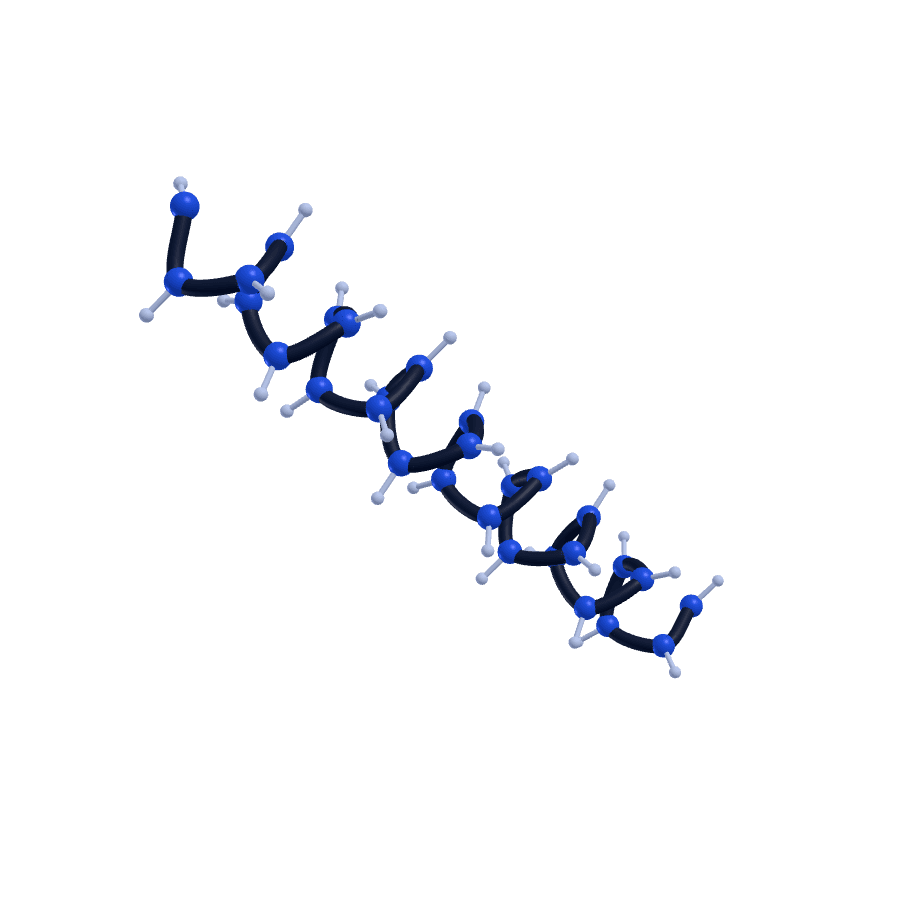
CJC-1295 is the same 29-amino-acid GHRH fragment as sermorelin, with four amino-acid substitutions to resist breakdown and — in the DAC version — a chemical linker that binds it to albumin in the blood. Albumin circulates for weeks, so the peptide goes with it. That is the whole design idea: turn a minutes-long hormone into a weekly injection.
Confusingly, much of what is sold as "CJC-1295" without DAC is simply modified GRF(1-29), which does not have the long half-life. The two are routinely conflated in marketing.
How it is thought to work
Same receptor as sermorelin and tesamorelin, sustained far longer. The pharmacological question that was never answered is whether continuous elevation is better or worse than the body's natural pulses — growth hormone is normally released in bursts, and receptors respond differently to a constant signal.
What is still unknown
- Whether sustained rather than pulsatile GH elevation is beneficial or harmful.
- Any clinical outcome at all.
- Long-term safety; the trials never ran long enough to say.
Regulatory status
No authorisation; sale for human use is an offence for the seller.
Never approved; development discontinued.
GH-releasing factors banned at all times.
Scheduled by the TGA; not available without a prescription.
Questions people actually ask
Does CJC-1295 build muscle?
What is the difference between CJC-1295 with and without DAC?
Why was development stopped?
References
- 1Teichman SL, et al. Prolonged stimulation of growth hormone and insulin-like growth factor I secretion by CJC-1295, a long-acting analog of GHRH, in healthy adults.J Clin Endocrinol Metab, 2006;91:799–805The early-phase human pharmacology; no outcome endpoints.
Change log
- 2026-09-02Initial publication. Hormone effect graded B; all downstream outcomes D.